The Amalfi Coast in Shoulder Season: What Is Open in April and October
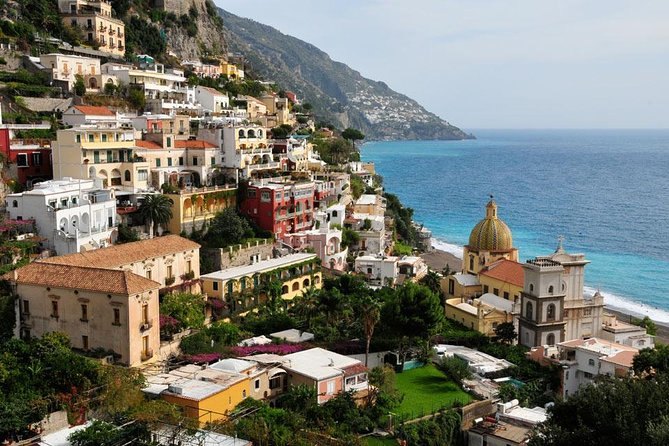
The useful seasonal question on the Amalfi Coast is not what the weather will do. It is what is running. The boat operators publish their own trading seasons, and those dates — not the temperature — decide whether the day you are imagining exists at all. This guide sets out what is open in April, May, September and October, and what you gain and risk by avoiding July.
What does shoulder season mean here?
Two windows: roughly mid-April to the end of May, and September to the middle of October. In both the sea is swimmable, the boats are running and the coast road is moving. Outside them you are either in high summer, when everything is open and everything is full, or in winter, when half the coast is shut.
The reason this matters more here than in most destinations is that the alternative to a boat is not a slightly worse boat. It is no boat.
The operators' own seasons, which are the real calendar
Captured directly from the listings rather than inferred:
| Operator or trip | Season it declares |
|---|---|
| A shared road day from Sorrento | 10 March – 8 November |
| A private charter from Amalfi | From 11 March |
| A small-group cruise from Positano | 13 April – 31 October |
| A small-group boat from Positano | 15/16 April – 24/25 October |
| A small-group boat from Sorrento | 16 May – 18 October |
Read that table twice if you are planning for early April or late October. One boat here does not open until the middle of May and another shuts on the 18th of October, so "shoulder season" is not one date range but several, and they do not all overlap.
April
The season turns. Ferries start, most boat operators open between the 13th and the 16th, and highs at Salerno reach around 20 °C with rainfall down to about 85 mm from a February peak. The terraces are in flower. The sea is still cold enough that most people look at it rather than get in.
Book the second half of the month rather than the first if the water matters. Book either half if the towns do: Positano in April is a different place from Positano in August.
May
The best month on this coast, or joint best with September. Rain falls away sharply to around 42 mm, highs reach about 25 °C, and every boat is running by the middle of the month. The road is busy but still moving, and the towns are full without being crowded.
One caution: the last week of May is when the small boats start selling out days ahead, so book before you arrive if you want a specific departure. And the restaurant stop on one boat day only opens from 14 May, which is the kind of date worth checking on the listing rather than assuming.
September
The other best month, and arguably better than May for one reason: the sea has had all summer to warm up. Highs stay around 28 °C, the crowd thins noticeably after the first week, and every operator is still open. Rainfall creeps back to about 78 mm, usually as short storms.
September is the month experienced visitors keep going back for. If you can only choose one shoulder month and swimming is on the list, choose this one.
October
Two different months in one. The first half is genuinely good: warm water, thin crowds, everything still running. The second half is a gamble — boat seasons close between the 18th and the 31st depending on the company, rainfall jumps to around 132 mm, and the ferries wind down with them.
If you are coming in the second half of October, check the specific trip's season before you book flights around it. The month-by-month page has the figures and the closing dates.
Is the sea warm enough?
In April, for most people, no. In May, yes towards the end. In September, yes and it is at its best. In October, yes in the first half. The Mediterranean lags the air temperature by about six weeks, which is why September beats June for swimming despite June being the sunnier month.
Every boat here carries life jackets and most carry floats, and the swim stops are optional on all of them, so a cool sea does not waste a boat day — it just changes what you do during the stops.
What closes, and when
- Ferries: roughly April to October. No passenger boats between November and March.
- Boat tours: mid-March to mid-April at the earliest; last departures between 18 October and 8 November.
- Restaurants and hotels in the smaller towns: many close for the winter, particularly in Praiano, Furore, Conca dei Marini and Atrani.
- Road tours: these run all year, which is what makes a winter visit possible at all.
How much quieter is it really?
Noticeably, and it shows up in the two places that matter: the coast road and Positano. In August the SS163 can double its journey times and Positano's lanes are shoulder to shoulder from mid-morning. In May and September the road moves, and the town is walkable before ten and after four.
What does not change much is the boats, because the small ones cap at five to twelve people whatever the month. A boat day in August is not more crowded than a boat day in May — it is simply harder to book.
What shoulder season costs
Usually less, and occasionally the same. Three of the trips here were carrying live discounts when the listings were captured, which is more common outside the peak weeks than in them. Accommodation is where the real saving sits, and it is substantial between Positano and Ravello.
Against that, put the cost of a day lost to weather. Which brings us to the one honest argument for July.
The risk you are taking
Weather, and it is a real risk rather than a theoretical one. Several operators state plainly that the captain may cancel for sea state, in which case you are offered another date or a full refund — which is fine if you have another date and useless if you do not. October is the month this bites hardest, with rainfall back above 130 mm and the season closing around you.
⚠ Keep a spare day. If a boat day is the point of your trip and you are travelling in April or October, book it for the first half of your stay rather than the last, so a cancellation has somewhere to move to. If it cannot move, the road runs whatever the sea does — see boat or road for what the alternative buys you.
What a shoulder-season day actually looks like
Take a Tuesday in late September. You leave Positano's Spiaggia Grande at half past nine on a boat carrying eight rather than twelve, because the last-minute bookings that fill it in August have stopped. The first swim stop is off Praiano and you have the cove more or less to yourself. Amalfi at two o'clock has queues at the cathedral steps but tables free on the seafront, and the ferry back at five is not standing room only.
The same Tuesday in August: the boat is full, the cove has four other boats in it, Amalfi's seafront is solid, and the road back would have taken twice as long if you had been on it. Nothing about the coast has changed. What has changed is how much of it you get to yourself, and that is the whole argument for the shoulder.
The one thing you give up is certainty. In August the weather is settled and the only question is how hot. In April and October the sea can close a boat day at a few hours' notice, and in the second half of October the operators start shutting for the year around you. That trade — a quieter coast against a less reliable one — is the real decision behind the month.
So which month?
September, then May, then the first half of October, then April. If you cannot choose and you want to swim, September. If you want the towns at their quietest and do not mind a cool sea, April. And if you are locked into July or August, book everything before you arrive and start every day at eight.
The seasons each trip declares are on its own card at Amalfi Coast Italy Tours, and the visiting page covers the rest of the planning.
Frequently asked questions
What is the best time of year to come?
Do Amalfi Coast tours run in winter?
Do the ferries run all year?
What happens if the sea is too rough for the boat?
Do I need to book in advance?
Trips with the longest seasons
Small Group Boat Tour: Discover the Amalfi Coast from Positano
Seven hours from Positano, and carrying a discount at capture.
From $159 per person
Check AvailabilityFull Day Private Amalfi Coast Tour from Sorrento/Naples/Salerno
A road day, which runs whatever the sea is doing.
From $337 per person
Check AvailabilityPositano: Amalfi Coast Small-Group Boat Tour with Swim and Drinks
Mid-April to late October, with a fixed 9:30am start.
From $176 per person
Check Availability