One Day on the Amalfi Coast: Three Plans That Fit
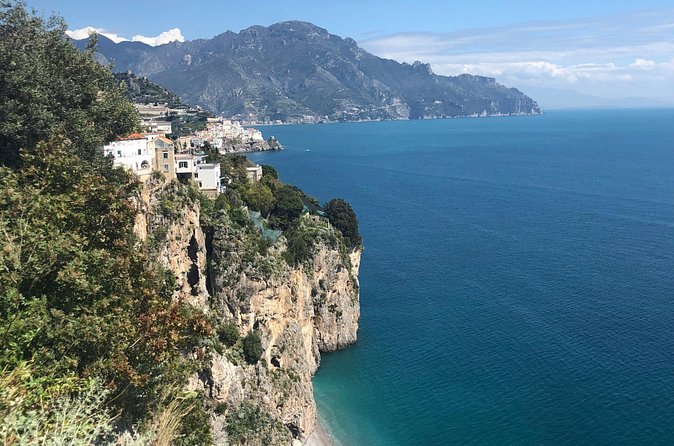
Most people give the Amalfi Coast a single day out of a longer trip, and the coast is unusually good at punishing a bad plan for one: there is no railway, one road, and thirteen towns spread over fifty kilometres. Three shapes of day work here. This guide sets out each of them, what each really takes in hours, and what each leaves behind.
How much can one day actually hold?
Three towns, or one town and a stretch of coast, or one town properly. Not more. The arithmetic is simple once you accept the road: an hour and a quarter end to end in light traffic, two hours or more in August, and a parking search at every stop if you are driving yourself.
A guided day of eight to nine hours gives you around five hours out of the vehicle. A boat day of seven gives you two or three ashore and the rest on the water. A day in one town gives you the whole day in one town. Those are the three honest options.
Plan A: the three-town run
The classic, and what most visitors mean when they say they are doing the coast. Positano, Amalfi and Ravello, in that order, west to east and uphill at the end.
- 08:00–08:30 — leave Sorrento. Earlier is better; the coaches build up after nine.
- 09:30–11:00 — Positano. Walk down through the lanes to Spiaggia Grande and back along the shore path.
- 11:00–11:45 — on to Amalfi. In season one tour makes this leg by boat, which is the best forty minutes of the day.
- 11:45–13:45 — Amalfi. The cathedral steps, the piazza and lunch.
- 14:15–15:30 — Ravello. The square and one of the two villa gardens; both is ambitious.
- 16:00–17:30 — back down the coast and over the ridge.
What it leaves out: swimming, the coves, and any sense of what the coast looks like from the water. What it gets right: the three towns everybody has heard of, and Ravello, which nothing else on this list reaches.
Plan B: a day on the water
Board a boat at Positano, Amalfi, Sorrento or Salerno depending on where you are staying, and spend the day between the towns rather than in them.
- 09:00–09:30 — check in at the pier, ten to twenty minutes before departure.
- Morning — west or east along the cliffs, past Li Galli, Marina di Praia, La Gavitella and the Fiordo di Furore, with the first swim stop wherever the water is clearest.
- Midday — the Grotta dello Smeraldo at Conca dei Marini, if the boat is going and the group votes for it. Entry is bought at the cave.
- Early afternoon — one to three hours ashore, usually in Amalfi.
- Late afternoon — a second swim stop and back to the pier.
What it leaves out: Ravello, entirely, and most of the walking. What it gets right: the half of this coast that has no road to it, and the swimming that is the whole reason some people come.
Plan C: one town, slowly
Underrated, and the right answer more often than people expect. Take the ferry or the bus to Amalfi, spend the morning on the cathedral, the cloister and the paper museum up the Valle dei Mulini, have a long lunch, walk the ten minutes round the headland to Atrani in the afternoon, and go back.
What it leaves out: two thirds of the famous names. What it gets right: everything else. You will have seen one town properly instead of three from a vehicle window, and Atrani — 0.12 square kilometres, the smallest comune in Italy — is the place people remember from a first visit far more often than they expect.
The three plans compared
| Plan A: three towns | Plan B: the water | Plan C: one town | |
|---|---|---|---|
| Hours | 8–9 | 4–8 | As many as you like |
| Typical cost | From $109 a person | From $110 a person | A ferry or bus fare |
| Towns | Positano, Amalfi, Ravello | One or two, usually Amalfi | One |
| Swimming | Only if you make time | Two or more stops | Whenever you feel like it |
| Reaches Ravello | Yes | No | Only if you pick Ravello |
| Needs booking | Yes, days ahead in summer | Yes, days ahead in summer | No |
| Best for | A first visit | Swimmers and repeat visitors | Anybody in no hurry |
Where should the day start?
Wherever you are sleeping, and that is a bigger constraint than it sounds. From Sorrento, everything begins with crossing the peninsula: forty minutes to an hour before the coast even starts. From Positano or Amalfi you are already on it. From Salerno, the ferry puts you in Amalfi in twenty-five minutes.
If you are choosing a base with a single day in mind, choose Amalfi. It is central, it is flat, the ferries call there and both road and boat tours pick up from it. The coast map sets out the distances properly.
What time should you leave?
Between 07:45 and 08:30. One shared minivan leaves Piazza Tasso at 07:45; the guided minibus days leave between 08:00 and 08:30; the boats mostly go at 09:00 or 09:30. The reason to take the earliest of those is Positano: the town is genuinely different before the coaches arrive at around half past nine, and you will never get that hour back later.
💡 Useful tip. Whatever plan you choose, do not schedule anything for the evening of the same day. The coast road decides when you get home, not your itinerary, and in August it decides late.
What each plan leaves out
Plan A leaves out the water and therefore the coves, the sea caves and the swimming. Plan B leaves out Ravello, which is the town people most often say they wish they had seen. Plan C leaves out two thirds of the coast and gains a day that does not feel like a schedule.
None of that is a flaw. One day on a fifty-kilometre coast is one day, and the only real mistake is trying to make it hold all three plans at once.
Can you add Pompeii?
To a one-day coast trip, no. Pompeii deserves two hours minimum and sits an hour from the western end of the coast, so adding it turns a full day into a rushed one at both ends. If Pompeii is a priority, give it its own half day: several trips pick up from coastal hotels, and a 2026 adult ticket is €20 with last entry at 17:30 between mid-March and mid-October.
The one shape that does work is a private vehicle doing Pompeii in the morning and two coastal towns in the afternoon, which is an eight-hour day and drops Ravello.
What goes wrong, and how to avoid it
- Underestimating the road. Add half again to every journey time in July and August, and do not plan a train home the same evening.
- Driving yourself on a first visit. Parking is scarce and expensive, and an alternate-plate scheme closes the coast road to half of all number plates on the busiest dates. The Amalfi Drive covers it.
- Booking on the day. The small boats carry five to twelve people and go days ahead between June and September.
- Trying to do Positano properly in an hour. It is a staircase. Either give it ninety minutes or look at it from the water.
What does the day cost, all in?
Work it out before you choose a plan, because the fare is only part of it. Plan A on a shared guided day is $109 to $130 a head, plus lunch, plus any villa admission you decide on at Ravello. Plan B is $110 to $182, usually with drinks and snacks aboard, plus the Grotta dello Smeraldo if the boat is going and the group wants to. Plan C is a bus or ferry fare and whatever you eat.
For two people the gap between the cheapest guided day and the fully independent version is roughly two hundred dollars, and what that buys is about two hours of waiting and standing that you do not do, an eight o'clock start you would not have made, and somebody else parking. Whether that is worth it depends on how many days you have here rather than on how much you like buses.
If you have two days instead
Do Plan A and Plan B, in that order. The road day puts names on the towns; the boat day then shows you the same coast from below, and you know what you are looking at. If you have three, add Plan C on the third and let the coast slow down.
Comparing Amalfi Coast day trips by time ashore rather than by total length is the single most useful thing you can do before booking either of them, and the full list is on Amalfi Coast Italy Tours.
Frequently asked questions
Can I see Positano, Amalfi and Ravello in one day?
How many days do I need here?
Which town should I base myself in?
How long do you actually get in each town?
Do I need to book in advance?
Days that fit each of the three plans
Day Tour to Positano, Amalfi & Ravello from Sorrento
Plan A, guided, with the Positano to Amalfi leg by boat in season.
From $109 per person
Check AvailabilitySmall-Group Amalfi Coast Day Cruise from Positano
Plan B, leaving from Positano's own beach at Spiaggia Grande.
From $130 per person
Check AvailabilityAmalfi Coast Shared Small Group Tour from Sorrento
Plan A in a group of eight, with two hours in Ravello rather than one.
From $112 per person
Check Availability